Why Roof Pitch Matters: A Westchester Metal Roof Transformation
When it comes to choosing a roofing material, appearance is only part of the decision. One of the most important factors is something many homeowners never think about: roof pitch.
On a recent project in the Westchester area of Miami, our team encountered a perfect example of why understanding the structure of a roof is so important before selecting the right roofing system.
The Problem: Shingles on a Low-Slope Roof
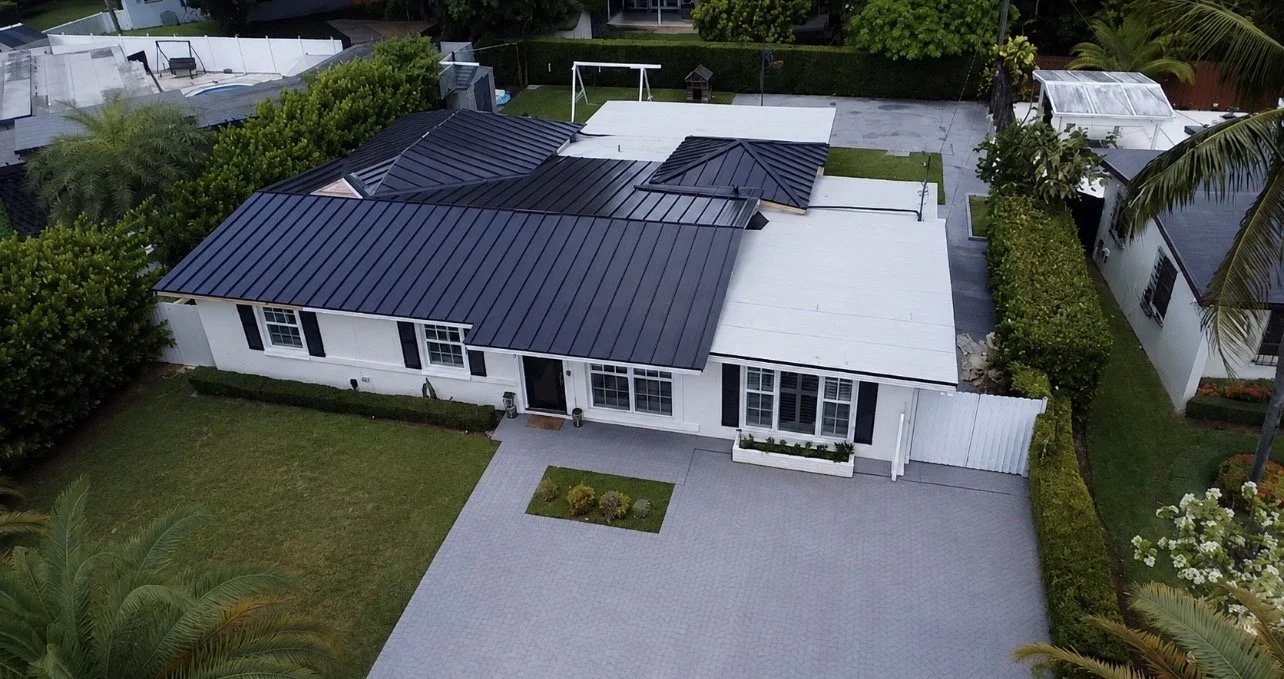
This home originally had a shingle roof. However, the main section of the roof has approximately a 1.5:12 pitch, meaning it rises only about 1.5 inches for every 12 inches of horizontal distance.
That presented a problem.
Traditional asphalt shingles generally require a minimum 2:12 roof slope under applicable installation and code requirements. On very low-slope areas, water does not drain from the roof as efficiently as it does on a steeper roof.
When shingles are installed in conditions they aren't designed for, water can remain on the roof longer and potentially work its way into vulnerable areas around fasteners, seams, and transitions. Over time, that can contribute to recurring leaks and other roofing problems.
And that was exactly what this homeowner had been experiencing.
What Were the Homeowner’s Options?
Because the main roof had a slope below what was appropriate for the existing shingle system, we explained the available roofing options before moving forward.
For this particular roof configuration, the practical choices included:
A roofing system specifically designed for low-slope or flat-roof applications
A properly designed metal roofing system suitable for the roof conditions
Rather than simply replacing the old shingles with the same material and potentially recreating the same problem, the homeowner decided to make a major upgrade.
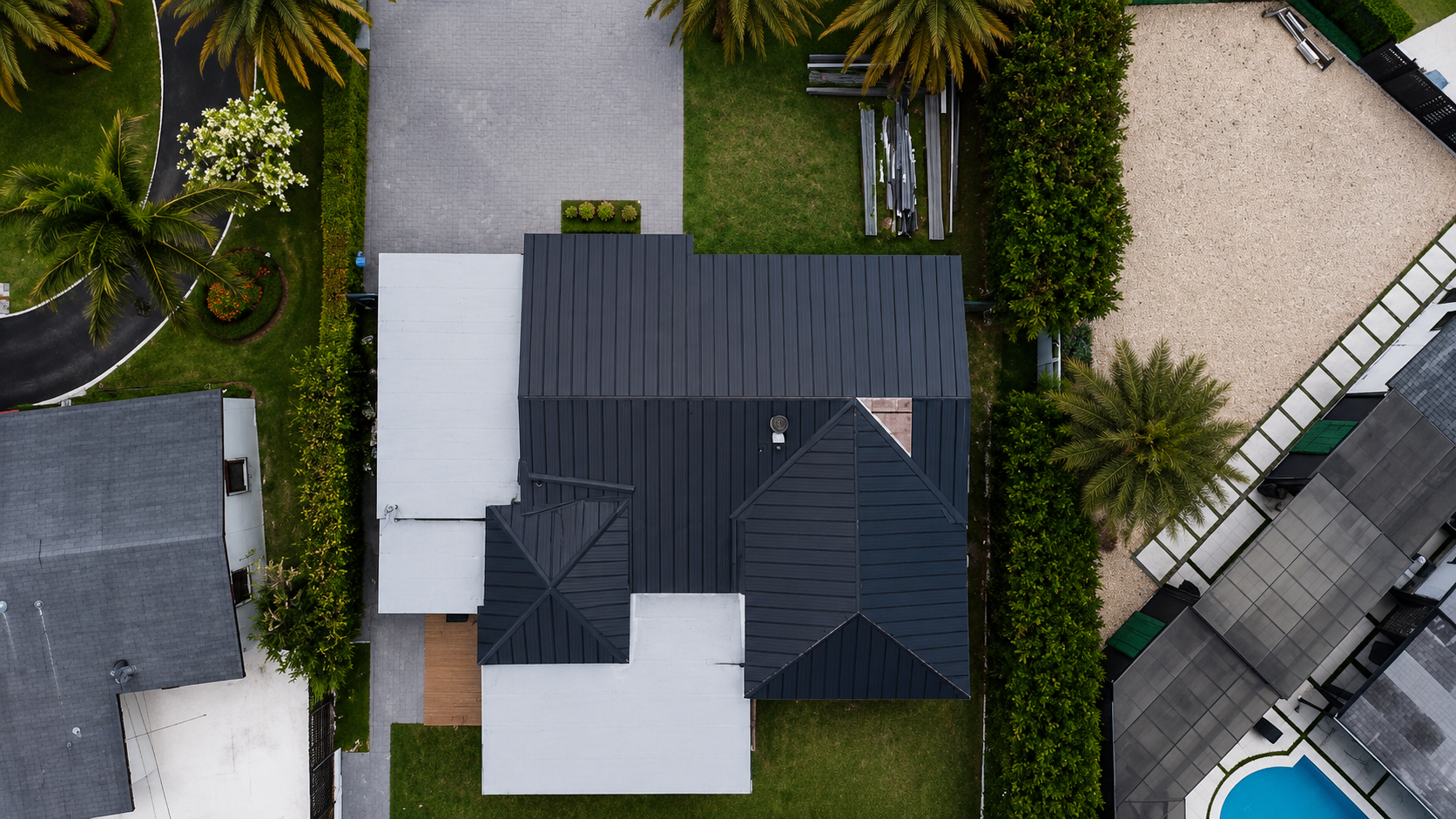
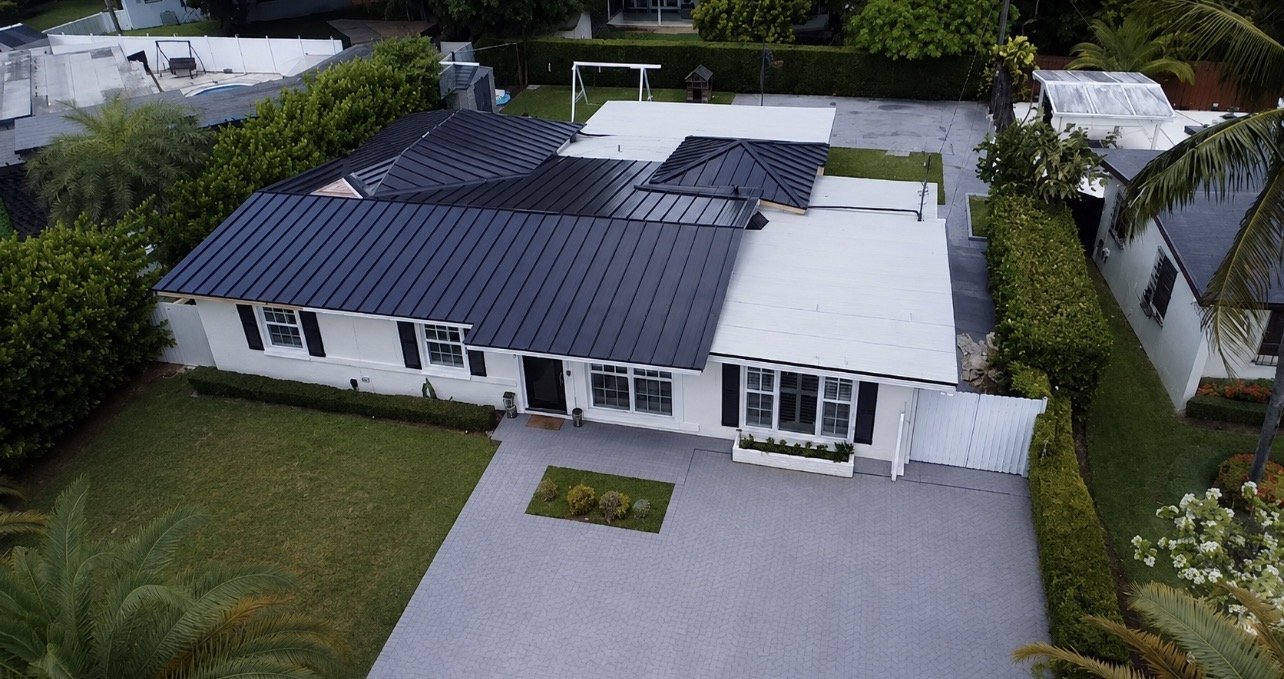
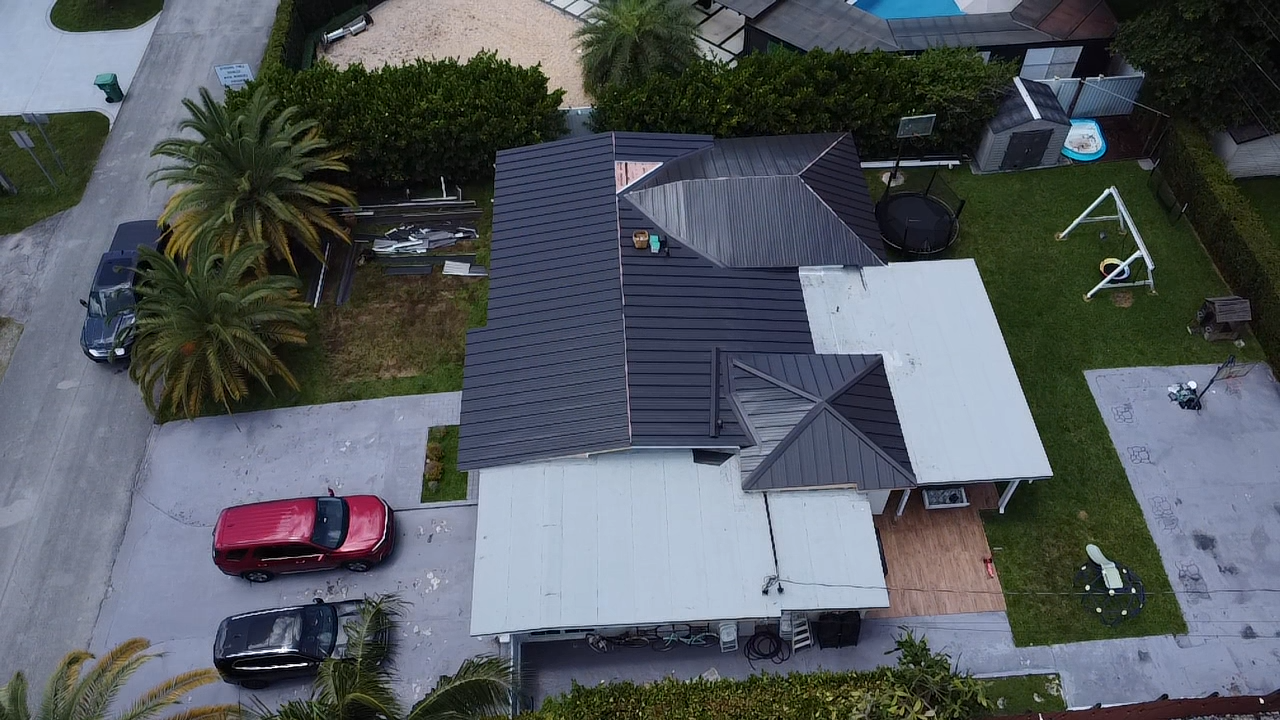
They chose metal roofing in Dark Bronze.
The result is a roof that not only works with the home's roof design but also completely transforms its appearance.
One Home, Multiple Roof Types
What made this Westchester roofing project especially interesting was the overall roof configuration.
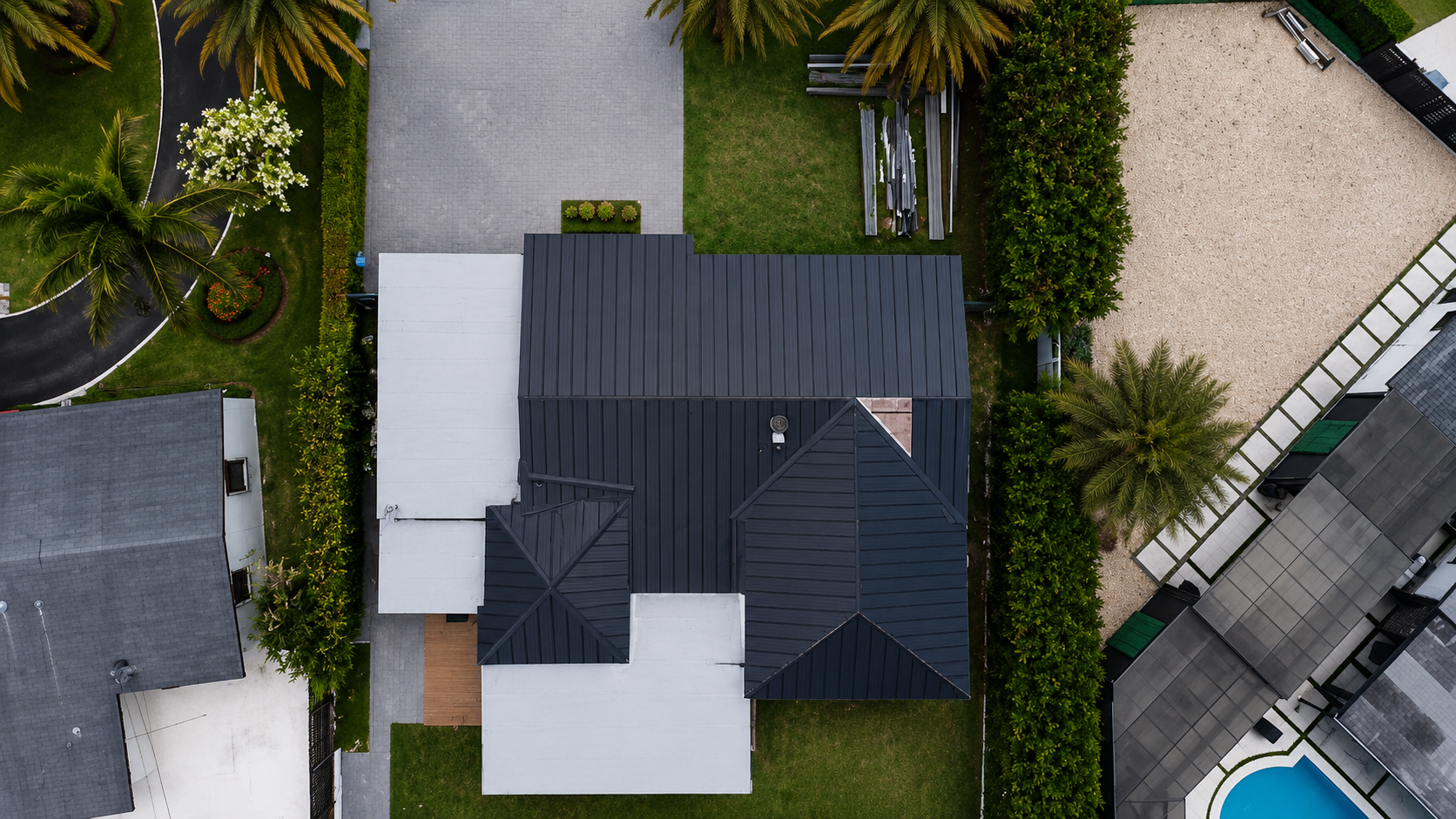
This isn't one simple roof plane.
The main portion of the home has a gable roof, with one side facing the front of the property and the other toward the back. The home also has later additions featuring hip roof sections with steeper pitches, as well as multiple flat-roof areas.
That means several different roof sections and transitions come together on one property.
Those transition points matter.
When a low-slope roof meets a pitched roof — and that section then connects with a flat roof — proper planning, waterproofing, flashing, drainage, and installation become especially important.
It is the type of project where roofing experience makes a major difference.
The Right Roof Starts With Understanding the Structure
At M3 Roofing, our job isn't simply to tell a homeowner which roof they should buy.
Our job is to inspect the property, understand the roof's structure and conditions, explain the available options, and help the homeowner understand the advantages and limitations of each system.
Ultimately, the homeowner makes the decision.
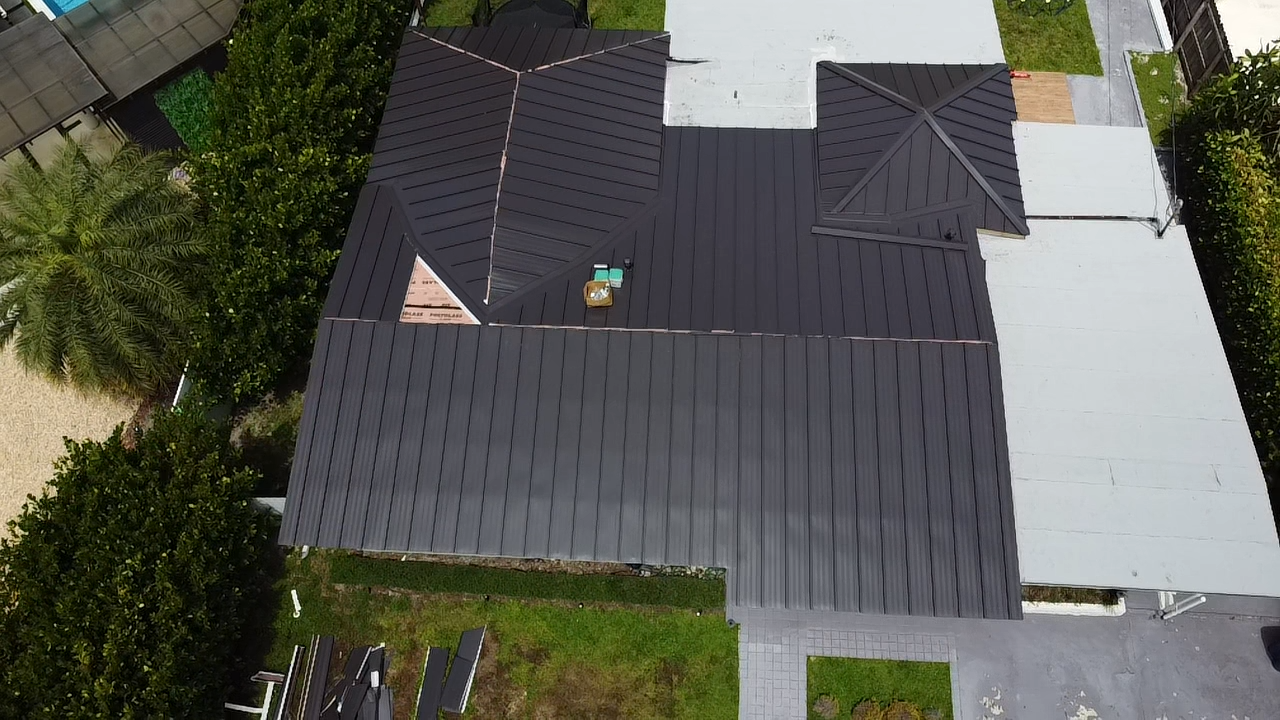
For this Westchester project, metal was the choice — and the Dark Bronze finish looks incredible on the home.
With installation nearly complete, the project will soon move into its final inspection stage.
The biggest takeaway for homeowners?
Not every roofing material works on every roof.
If you're experiencing recurring leaks — especially after previous repairs or a roof replacement — the problem may not simply be the age of your roofing material. The roof's pitch, drainage, transitions, or original material selection could be part of the issue.
Before replacing a roof, make sure you're getting more than a price.
Make sure you're getting an explanation.
Planning a Roof Replacement in Miami?
If you're considering replacing your roof or aren't sure which roofing system is appropriate for your home, the M3 Roofing team can evaluate your existing roof, explain your options, and help you make an informed decision.
Your roof is a system. Make sure it's designed to work as one.